
Payload capacity is the most important number to understand when shopping for a truck camper. It determines how much weight your truck can safely carry, including the camper, passengers, pets, water, gear, and everything else added to the vehicle. Unfortunately, payload is also one of the most misunderstood parts of buying a truck camper. It isn’t the same as towing capacity, and it can vary significantly between two trucks that appear identical. Before buying a camper or modifying your suspension, here’s what you need to know.

What Is Payload Capacity?
Payload capacity is the total amount of weight your truck is rated to carry, including the camper, passengers, pets, fluids, gear, and accessories.
Payload is closely related to two other common terms:
-
GVWR (Gross Vehicle Weight Rating): The maximum your fully loaded truck is rated to weigh.
-
GVW (Gross Vehicle Weight): What your truck actually weighs at a given time.
In simple terms:
GVWR − the truck’s empty weight = payload capacity
As you add a camper, passengers, water, gear, or accessories, the truck’s GVW increases, and its remaining payload decreases. Your loaded GVW should not exceed the truck’s GVWR.
You can find the payload rating for your specific truck on the label inside the driver-side door jamb. Do not rely solely on a manufacturer’s website or assume every truck of the same make and model has the same rating. Cab configuration, drivetrain, trim level, engine, and factory options can all affect available payload

Payload Is Not Towing Capacity
Towing capacity describes how much weight a vehicle can pull behind it. Payload capacity describes how much weight it can carry. A truck may be rated to tow more than 10,000 pounds but have fewer than 2,000 pounds of payload. Because a truck camper sits in the bed, its entire loaded weight counts against payload. Towing capacity is therefore not the number to use when matching a truck with a camper. However, if you plan to tow a trailer in addition to carrying a camper, then it’s important to note the tongue weight. Tongue weight does actually count towards your payload capacity, so keep that in mind.
Labels such as half-ton, three-quarter-ton, and one-ton can be helpful starting points, but payload can vary considerably within each truck class. The door-jamb label should always be your starting point.
Dry Weight vs. Wet Weight
Most camper manufacturers advertise dry weight, which is useful for comparing models but does not represent the camper’s ready-to-travel weight.
Dry weight is generally the camper’s weight without fluids such as water and propane. Wet weight includes those fluids. You may also see a standard-equipment weight and a separate weight that includes factory-installed options.
Batteries, solar panels, awnings, air conditioners, refrigerators, jacks, and other upgrades can add hundreds of pounds. Because manufacturers may define their listed weights differently, ask what is included in the published number and confirm the weight of the camper as it is actually equipped. When possible, weigh the completed truck and camper on a certified vehicle scale like a Certified Automated Truck (CAT) Scale, often found at major travel centers around the country.

How to Think About Payload
The basic calculation for determining whether a camper is within your truck’s payload rating is simple:
Truck payload rating – (people + accessories + camper + fluids + gear, etc.) = Remaining payload
If what’s left is a positive number, you're on the right track. If it's a negative number, it's time to consider a lighter camper, trim some gear, or upgrade to a truck with a higher payload rating!
This calculation is useful whether you already own the truck and are shopping for a camper, or know the camper you want and are shopping for a compatible truck.
If you already have the truck, start with your payload rating and subtract all the people, pets, and accessories first. What’s left is your total budget for the camper (at its wet, equipped weight) plus additional fluids and gear.
For example, a truck with a 2,000-pound payload rating, two passengers (~350 pounds), and around 100 - 250 pounds of aftermarket accessories (this might include things like bumpers, winches, tire carriers, roof racks and lights) will have 1,400 - 1,550 pounds left over. That needs to cover your camper, pets, water, food, clothing, recovery equipment, and everything else going on the trip.
Your goal is not to find a camper whose dry weight barely fits beneath the payload rating. You need enough capacity left for the people and equipment you will actually carry.

Can Suspension Upgrades Increase Payload?
Short answer: No. Airbags, heavier springs, add-a-leaf kits, upgraded bump stops, and other suspension modifications can reduce sag and improve stability, handling, and ride quality under load. They do not, however, increase the manufacturer’s payload rating. Payload accounts for more than the rear springs. The frame, axles, tires, wheels, brakes, and cooling systems all play a role in how much weight the vehicle is designed to carry.
Suspension upgrades should be used to improve how a properly matched truck and camper handle, not to justify an overloaded truck. Always verify tire and wheel load ratings as part of the setup.
Common Payload Mistakes
The most common mistakes we see include:
- Shopping by towing capacity instead of payload
- Using the camper’s base dry weight as its travel weight
- Forgetting passengers, pets, water, gear, and camper options
- Assuming all trucks with the same badge have the same payload
- Buying the truck before deciding which camper it needs to carry
- Believing airbags or heavier springs increase the factory rating
Avoiding these mistakes will make it much easier to build a rig that drives well and leaves enough capacity for real-world travel.

Match the Camper to the Truck
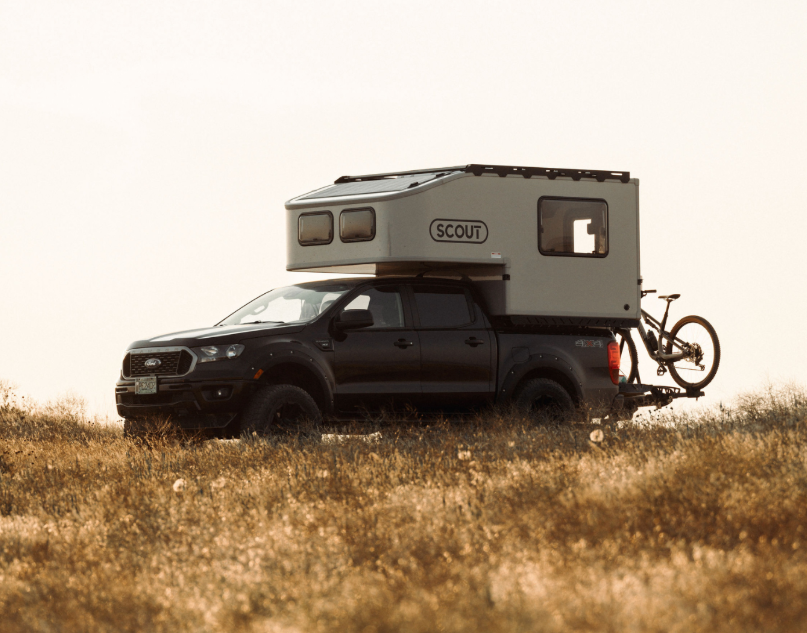
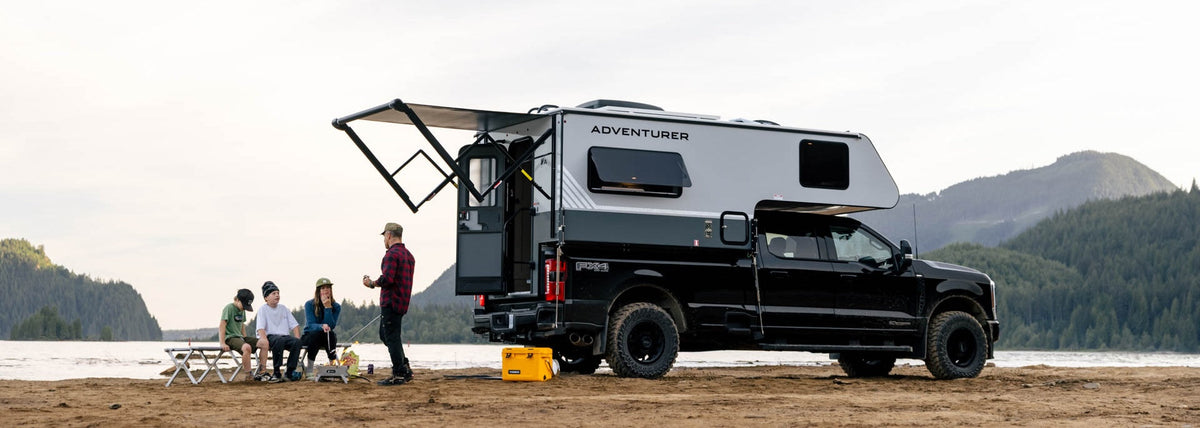
A lightweight topper or pop-up may be the best match for a compact or midsize truck. Half-ton trucks can carry select pop-ups and slide-ins, while heavier slide-ins and flatbed campers generally require a properly configured three-quarter-ton or one-ton truck. These are only broad guidelines—the individual truck’s payload label and the camper’s equipped weight ultimately determine whether the combination works.
Truck Camper Garage can help you compare camper weights, verify fitment, estimate your fully loaded weight, and choose appropriate tie-downs and suspension upgrades. Visit our San Diego showroom to start building a truck camper rig around the way you actually travel.